
For years, Melanie Marreel thought her eyesight was ordinary.
Marreel, 53, of Clear Lake, had worn glasses since high school and had astigmatism, but nothing that seemed particularly concerning. Then, about five years ago, a routine eye exam revealed something unexpected: The optician who was taking images of Marreel’s eyes couldn’t seem to get a clear picture.
“At first, they thought maybe the machine wasn’t cooperating,” Marreel says.
But it wasn’t the machine. Marreel was referred to an ophthalmologist, who diagnosed her with Fuchs dystrophy, a genetic condition that affects the innermost layer of the cornea and can cause it to swell and vision to become cloudy.
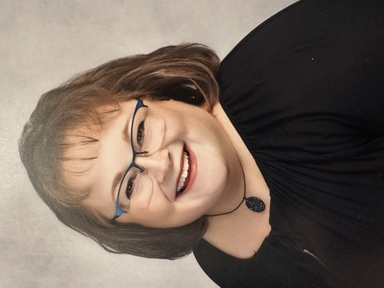
Suddenly, Marreel had an explanation for something she hadn’t fully realized was happening: her world was becoming increasingly hazy.
Her ophthalmologist told her that someday she might need a cornea transplant.
“I was like, ‘Excuse me?’” Marreel says with a laugh. “I can’t even wear contacts because I can’t fathom things being stuck in my eyeball.”
Fortunately, she didn’t have to have the transplant right away. Marreel continued with regular checkups until August 2025, when it became clear that the time had come.
The thought of a transplant was intimidating, but when Marreel underwent her first cornea transplant in February 2026, she was pleased the experience went smoothly.
What came afterward made an even bigger impression.
Her vision improved dramatically. Before surgery, Marreel hadn't fully appreciated just how cloudy her world had become. The difference between her transplanted eye and her other eye made it obvious.
She describes it this way: Looking through her transplanted cornea was like looking through Saran Wrap. Looking through the other was like looking through wax paper.
“You just don’t realize how bad it is until you get it fixed,” she said. “Then you realize, ‘Oh, that’s a lot better now.’”
Understanding the gift in a personal way
Marreel already knew what cornea donation could mean to a family long before she became a recipient herself.
Her stepdaughter-in-law became a cornea donor after her death from melanoma at age 44. Because of her illness, there were limits to what she could donate after her death. But her corneas could help others.
Now Marreel understands that impact from the perspective of a donor family member, and a recipient. Her experience has also given her a message for people who hear the words “cornea transplant” and feel the same apprehension she once did: Don’t let the idea of the surgery frighten you.
“It wasn’t as awful as I thought it was going to be,” she says.
Back to the classroom
Marreel has spent 28 years teaching and currently is a fourth-grade teacher in Clear Lake. Clear vision matters in nearly every part of her life, but perhaps nowhere is it more apparent than in the classroom.
Her job involves a lot of reading and screen time, all of which can become more challenging when vision is compromised. Her students have been understanding when surgery and recovery have taken her away from school, but Marreel is always eager to get back.
“I miss my students so much,” she said.
Outside school, Marreel loves spending time with her husband, four stepchildren and five step-grandchildren. She is also an avid scrapbooker — another hobby where being able to see the little details makes a big difference.
And long before she became a teacher, Marreel had a job that required her to see the world through a very different pair of eyes: She worked at Walt Disney World portraying Mickey Mouse.
When people ask why she ever left Disney, Marreel has a simple explanation. Her family was in Iowa, and she wanted to come home before the magic of Disney became simply another job.
Decades later, Marreel has experienced a different kind of magic — one made possible not by a theme park, but by the generosity of another person.